Is Georgia Safe in 2026? Mandatory Insurance & New Entry Rules You Must Know
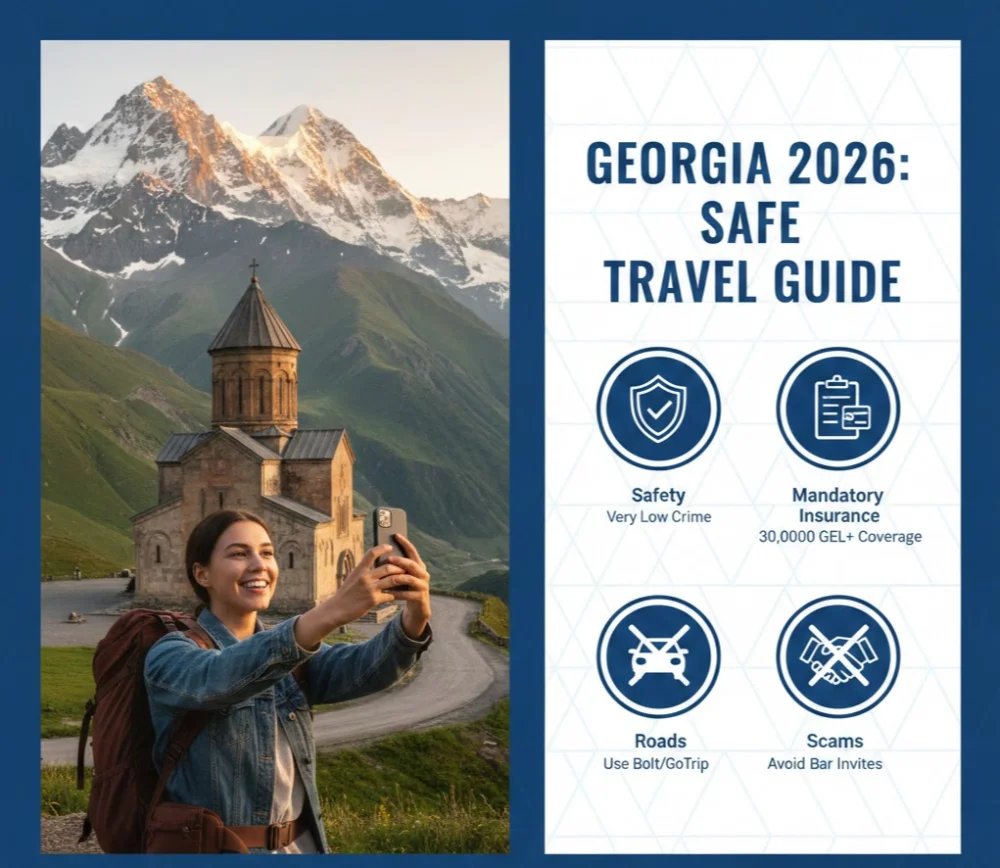
In 2026, the short answer is yes, Georgia remains one of the safest destinations in the region. However, "safe" doesn't mean "unchanged." As of early 2026, the country has introduced new regulations and is navigating a lively political landscape that every traveler should understand before booking a flight.
Here is a unique, up-to-date guide on the safety reality of Georgia in 2026.
1. The Big Update: Mandatory Travel Insurance
The most significant change for 2026 is the mandatory health and accident insurance requirement for all foreign tourists.
-
The Rule: Effective January 1, 2026, you must present proof of insurance upon entry.
-
The Coverage: Your policy must cover your entire stay with a minimum limit of 30,000 GEL (approx. $11,500 USD).
-
Pro Tip: Keep a digital or physical copy in English or Georgian. Border officials have become much stricter about this than in previous years.
2. Crime and Personal Safety
Georgia continues to boast lower violent crime rates than many Western European or North American hubs.
-
Violent Crime: Extremely rare for tourists. You can generally walk through Tbilisi, Batumi, or Kutaisi at night without looking over your shoulder.
-
Petty Theft: While still low, there has been a slight uptick in pickpocketing in crowded areas like the Tbilisi Metro and the Liberty Square area.
-
The "Bar Scam": Be wary of over-friendly strangers inviting you to "undiscovered" bars. These often end with a bill for hundreds of dollars and a few intimidating "security guards" demanding payment. Stick to reputable, well-reviewed spots.
3. Political Climate and Protests
In 2026, Georgia’s political scene remains passionate.
-
Demonstrations: Rallies are common, particularly in front of the Parliament building on Rustaveli Avenue. While mostly peaceful, they can cause significant traffic disruptions and, on rare occasions, lead to confrontations with police.
-
Your Strategy: If you see a large crowd with flags and megaphones, it’s best to take a side street. As a foreigner, getting caught in the middle of local political friction is an unnecessary risk.
4. Road Safety: The Real "Danger"
If you ask any expat in Georgia what they fear most, it isn’t crime—it’s the driving.
-
Driving Style: Georgian drivers can be aggressive. Overtaking on blind mountain curves is common.
-
Safety Tip: If you aren't an experienced mountain driver, use apps like Bolt for city travel or GoTrip for long-distance transfers. Avoid hailing "old-school" street taxis, as they often lack seatbelts and may overcharge.
5. Areas to Avoid
The safety "map" of Georgia hasn't changed much in terms of geography:
-
Occupied Regions: Do not travel to Abkhazia or South Ossetia. These regions are not under the control of the Georgian government, and your home embassy cannot help you there.
-
Border Zones: Exercise caution near the administrative boundary lines (ABL) of these regions, as there is a risk of detention if you accidentally cross an unmarked line.
Safety Snapshot 2026
| Category | Risk Level | Advice |
| Violent Crime | Very Low | Normal precautions apply. |
| Scams | Moderate | Avoid "random" bar invites from strangers. |
| Roads | High | Use taxi apps; avoid driving at night in the mountains. |
| Health | Low | Carry your mandatory insurance certificate. |
The Verdict: Georgia is a high-reward, low-risk destination. If you respect the local laws, avoid the occupied territories, and keep your insurance papers handy, you’ll find it to be one of the most hospitable places on Earth.


Comments