Ethnic Diversity and Religious Landscape of Georgia
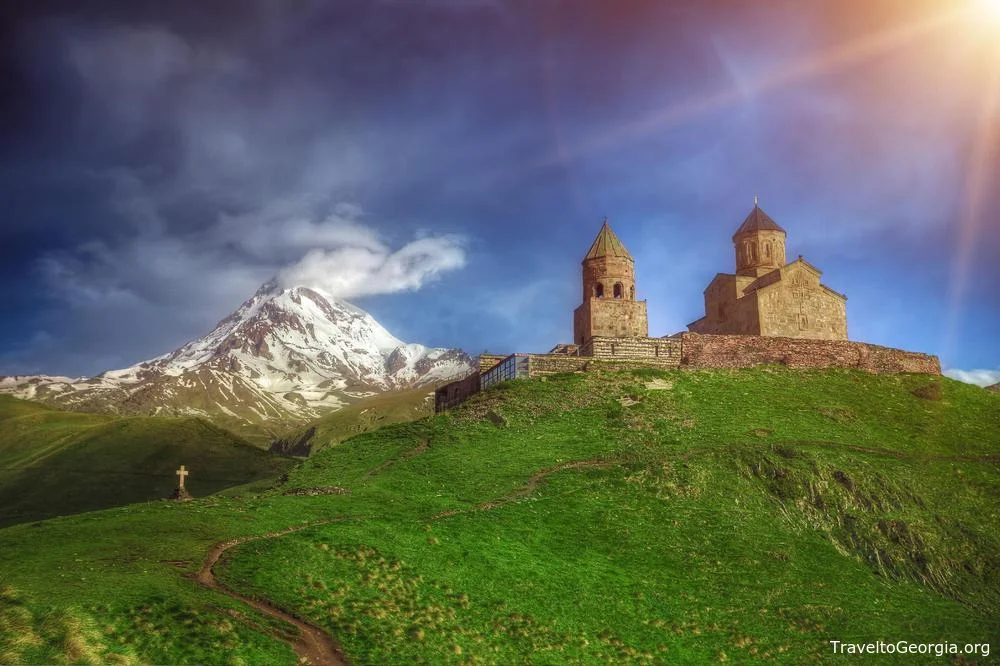
Religious Diversity in Georgia
Georgia, a nation at the crossroads of Europe and Asia, is not only rich in cultural heritage and history but also remarkable for its long-standing tradition of religious diversity and tolerance. Over centuries, different faiths have flourished side by side within its borders, shaping the spiritual landscape of the country. While Orthodox Christianity remains the dominant religion, Georgia is also home to Muslim, Armenian Apostolic, Catholic, Protestant, Jewish, and Yazidi communities — each contributing to the country’s multicultural identity.
Orthodox Christianity – The Spiritual Core of Georgia
The Georgian Orthodox Church is the spiritual heart of the nation, with the majority of the population belonging to this ancient branch of Christianity. The roots of Orthodox Christianity in Georgia trace back to the 4th century when Saint Nino of Cappadocia introduced the faith during the reign of King Mirian III of Iberia. Since then, the church has been an integral part of Georgia’s cultural and national identity, playing a key role in preserving the Georgian language, traditions, and unity through times of both prosperity and hardship.
In addition to ethnic Georgians, members of other communities such as Ossetians, Russians, Greeks, Abkhazians, Assyrians, Udis, and some Armenians also practice Orthodox Christianity. The faith’s influence can be seen in Georgia’s landscape, with countless monasteries, churches, and cathedrals — including the iconic Svetitskhoveli Cathedral in Mtskheta and Sameba Cathedral in Tbilisi — serving as spiritual and architectural symbols of the country.
The Armenian Apostolic Church
The Armenian Apostolic Church is the second most historically significant Christian denomination in Georgia. The majority of Armenians living in Georgia belong to this church, which has been present in the region for over a millennium. The Diocese of the Armenian Apostolic Orthodox Holy Church covers the entire territory of Georgia, with its Episcopal Palace located in Tbilisi.
Tbilisi itself is home to two functioning Armenian churches — Echmiadzin Cathedral and Surb Gevork (St. George) Church. Beyond the capital, Armenian churches can be found across the country, including Surb Khach Church in Akhalkalaki, Surb Sargis Church in Ninotsminda, St. Gregory the Illuminator Church in Akhaltsikhe, Christ the Saviour Church in Batumi, and the Church of the Holy Mother of God in Marneuli. These churches not only serve as places of worship but also as centers for preserving Armenian cultural and linguistic heritage in Georgia.
Catholicism in Georgia
Catholicism has a long, though smaller, presence in Georgia’s religious life. Catholic missionaries first arrived in the 13th century, spreading their faith through missionary work and cultural exchange. Over time, Catholic communities were established in various regions, and today Catholics make up about 0.5% of Georgia’s population.
The Georgian Catholic Church operates under the authority of the Roman Catholic Church. Historically, Georgian Catholics were sometimes referred to as “French,” much like Muslims were colloquially called “Turks” or “Tatars.” Today, functioning Catholic churches can be found in Georgia’s major cities, including Tbilisi, Kutaisi, Gori, Batumi, Ozurgeti, Kakheti, and Samtskhe, where the faithful continue to maintain their traditions and participate in interfaith cooperation.
Islam – The Second Largest Religion
Islam is Georgia’s second most widely practiced religion, with approximately 500,000 Muslims living across the country. Islam was introduced to Georgia in the 730s, following Arab influence in the region, and has remained an integral part of the country’s religious fabric ever since.
Muslims in Georgia are ethnically diverse. They include ethnic Georgians (particularly in Adjara, known historically as Muslim Georgians or Ajarians), as well as Azerbaijanis, Kists, Laks, and Abkhazians. There are currently 286 functioning mosques and prayer houses across the country. The capital, Tbilisi, is home to a unique mosque where Sunni and Shia Muslims pray together under one roof — a powerful symbol of unity and tolerance. Mosques can also be found in Samtskhe–Javakheti, Shida Kartli, and Ajara, serving as important centers of community life.
Judaism – One of Georgia’s Oldest Faiths
The Jewish community in Georgia is among the oldest in the world. Historical sources trace their arrival back to the 6th century BCE, when Jewish refugees fled from Babylonian King Nebuchadnezzar’s invasion and found refuge in Mtskheta, the ancient capital of the Georgian kingdom. Over the centuries, Jewish families settled in various regions, including Akhaltsikhe, Kutaisi, Tskhinvali, Surami, Sachkhere, Ozurgeti, and later, in Tbilisi during the 19th century.
Today, Jewish life in Georgia continues to thrive, with synagogues found in several major cities. Among the most notable are Sha’arei Tefila Synagogue in Tbilisi, the synagogues in Batumi, Kutaisi, Gori, and Akhaltsikhe, each often equipped with facilities such as men’s and women’s mikvahs (ritual baths). The long coexistence of Jews and Georgians has fostered mutual respect, and Georgia is known for its absence of significant antisemitic incidents throughout history.
Protestantism and the Lutheran Church
Protestantism took root in Georgia during the 19th and early 20th centuries, introduced by European settlers — particularly Germans, Russians, and other European communities — who immigrated to the Caucasus for economic and political reasons. Among the Protestant denominations that settled in Georgia were Baptists, Old Orthodox believers, Malakans, Lutherans, and Doukhobors. These groups brought new cultural and social traditions, enriching Georgia’s religious landscape.
The Evangelical Lutheran Church was established toward the end of the 19th century, when ethnic Germans from the Württemberg region migrated eastward between 1817 and 1818. Lutheran parishes exist in several Georgian cities, including the Tbilisi Reconciliation Church, Rustavi Peace Church, and parishes in Gardabani, Bolnisi, Borjomi, and Sokhumi. The Lutheran Church in Rustavi, known as the Church of Peace, remains a central gathering place for Georgia’s Protestant community.
The Yazidis
The Yazidis, a Kurdish-speaking ethno-religious group, began settling in Georgia in 1918, fleeing persecution in the Ottoman Empire. Over the years, Georgia became a place of safety and new beginnings for Yazidi families. However, after the collapse of the Soviet Union in 1991, many Yazidis emigrated to Europe, seeking better opportunities. Those who remain in Georgia continue to uphold their traditions, though some have integrated into other faiths or identify culturally rather than religiously as Yazidis. In Tbilisi, the Yazidi Temple and Cultural Center, opened in 2015, stands as a symbol of their enduring presence.
The State Agency for Religious Issues
To ensure harmony among the various faiths, Georgia established the State Agency for Religious Issues, which is responsible for promoting religious freedom, dialogue, and tolerance. The agency works closely with different faith communities to preserve the country’s rich religious heritage and maintain peaceful coexistence among all believers.
Georgia’s centuries-old tradition of religious pluralism remains one of its greatest strengths. From the golden domes of Orthodox churches to the crescent towers of mosques, from synagogues and Armenian cathedrals to Catholic and Protestant churches, the nation’s sacred spaces tell a powerful story — one of faith, coexistence, and respect. In Georgia, religion is not just a belief system; it is a reflection of the country’s soul — diverse, resilient, and deeply intertwined with its history.


Comments