Soviet Era Georgia: A Complete Travel Guide (2026)
Introduction
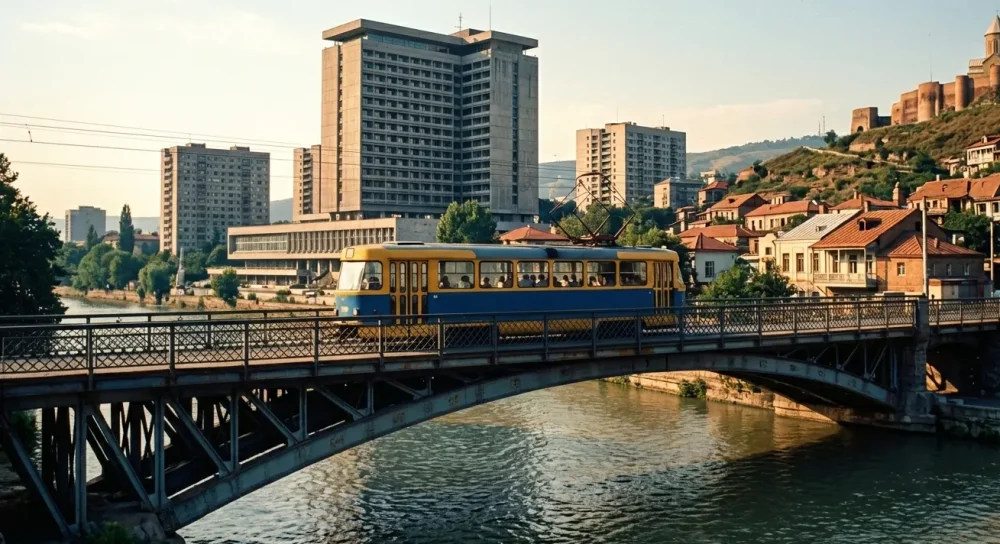
Georgia carries its Soviet past like few other nations — not with shame, but with a raw, unfiltered honesty that makes it one of the most fascinating places on earth for history lovers. As the birthplace of the Soviet Union's most infamous dictator, Georgia was transformed during the Soviet era into an industrial urban complex — yet its traditional culture survived, with ancient winemaking methods, World Heritage religious monuments, and a unique culinary identity remaining intact.
Today, the traces of that 70-year chapter are everywhere: in crumbling sanatoria, monumental mosaics, cable cars frozen in time, and brutalist towers rising above ancient churches. This guide will take you through the best Soviet-era sites in Georgia, from Tbilisi to the western highlands.
Why Visit Soviet-Era Sites in Georgia?
These 70 years had a profound impact on the country, affecting its architecture, lifestyle, mindset, and more. Tbilisi is a great example of brutalist architecture — a city where you can explore the Soviet past, hear untold stories, and get a local perspective unlike anywhere else.
For urban explorers, photographers, and history enthusiasts, Georgia offers a remarkable concentration of Soviet heritage that remains largely off the mainstream tourist radar.
Top Soviet-Era Destinations in Georgia
1. Tbilisi — Brutalist Capital
In Tbilisi you can see stunning examples of refurbished concrete giants as well as decaying Brutalism, among them the former Ministry of Roads, the Skybridge houses, the Chronicle of Georgia monument, and many hidden gems. This makes it perfect for urbex lovers, photographers, modern history fans, and anyone who wants to see a different, non-touristic side of the city.
Don't miss Stalin's Underground Printing House — a secret propaganda press hidden beneath the city streets, open on weekdays. The Sololaki district also rewards slow walking, where Soviet-era buildings stand shoulder to shoulder with 19th-century mansions.
Insider tip: Take the Tbilisi Metro — the stations themselves are Soviet architectural gems.
2. Gori — Stalin's Hometown
The Stalin Museum in Gori is a must-visit for anyone interested in Soviet history. The museum complex includes Stalin's original childhood home, his personal railway carriage, and a remarkably candid collection of artifacts from his rise to power. The town itself retains a distinctive Soviet character that makes it worth an afternoon of wandering beyond the museum walls.
Getting there: Gori is about 80 km west of Tbilisi, roughly 1.5 hours by marshrutka or car.
3. Tskaltubo — The Ghost Resort
Tourism during the Soviet era was often health-focused, with visits to sanatoria to enjoy spa treatments and mineral waters being a highlight. The town of Tskaltubo became a popular destination for tourists from across the USSR, attracted by its plentiful mineral springs — the result was a small settlement packed with increasingly elaborate sanatoria built to impress, with huge cavernous halls, enormous pillars, and dramatic neoclassical frontages.
After the collapse of the USSR, Tskaltubo's tourism industry crashed and the majority of the sanatoria fell into disrepair. These splendid buildings still stand — most of them derelict but with a majestic stateliness. The Medea Sanatorium is perhaps the grandest, and it's possible to explore its corridors, stairways, and dormitories.
Getting there: Tskaltubo is just 6 km from Kutaisi, easily reached by taxi or local bus.
4. Chiatura — City of Cable Cars
Chiatura is famed for its network of cable cars known as "Stalin's Ropeways" — perfect for urbex enthusiasts. Built in the 1950s to transport manganese miners across the city's dramatic gorges, many of these cable cars are still operational today, creaking their way between Soviet-era platforms. Riding them feels like stepping directly into 1960s USSR.
After exploring Chiatura's many socialist-era wonders, a visit to the isolated Orthodox monastery of Katskhi — famously and precariously built on top of a natural rock pillar — makes for an unforgettable contrast between Soviet industrialism and ancient Georgian faith.
5. Rustavi — The Industrial Monotown
A Soviet-era monotown purpose-built around the Rustavi Metallurgy Plant in the 1940s, Rustavi is the perfect day trip from Tbilisi for lovers of history, architecture, and urban exploration. It's the industrial heritage and Soviet city planning — specifically the Empire architecture, the mosaics, the Metallurgy Factory, and the Brutalist apartment blocks — that makes Rustavi one of the quirkiest places in Georgia.
6. The Russian-Georgian Friendship Monument
Sitting on a mountainous outcrop overlooking the Devil's Valley along the Georgian Military Highway, the Russian-Georgian Friendship Monument is one of the highlights of the route. Dating from 1983, this vast circle of concrete commemorates 200 years of Russian rule over Georgia, with interior walls decorated in rich Soviet-style murals depicting scenes from both Georgian and Russian history — and spectacular views over the surrounding Caucasus mountains as an added bonus.
7. Soviet Mosaics of Western Georgia
If you're interested in Soviet-era mosaics, the regions of Samegrelo and Guria in western Georgia are must-sees. Dozens of mosaics adorn bus stops, old factories, and schools across both regions. These pieces of public art — once used as state propaganda — are now fading outdoor galleries, each one a time capsule of Soviet aesthetics and ideology.
Practical Tips for Exploring Soviet Georgia
Best time to visit: Spring (April–June) and autumn (September–October) offer ideal weather for outdoor exploration of sites like Chiatura and the Friendship Monument.
Getting around: A rental car gives you the most flexibility to visit Gori, Chiatura, and Tskaltubo in one trip. Marshrutkas connect Tbilisi to Gori and Kutaisi regularly.
Guided tours: For a deeper experience, tours led by guides who actually lived through the Soviet period in Georgia offer a genuinely personal perspective — something no documentary or book can fully replicate.
Photography: Most Soviet-era exteriors can be freely photographed. Always ask permission before entering abandoned buildings, and exercise caution — some structures are genuinely unstable.
A Final Word
Soviet-era Georgia is not just about crumbling concrete and Cold War nostalgia. It's a story of a proud, ancient nation that survived occupation with its identity intact — its wine, its language, its Orthodox faith, and its legendary hospitality unchanged. Visiting these sites is a way of understanding not just what Georgia was, but how it became what it is today.

Comments