How to Make Khinkali: Authentic Georgian Dumplings Recipe
The Story and Tradition of Khinkali
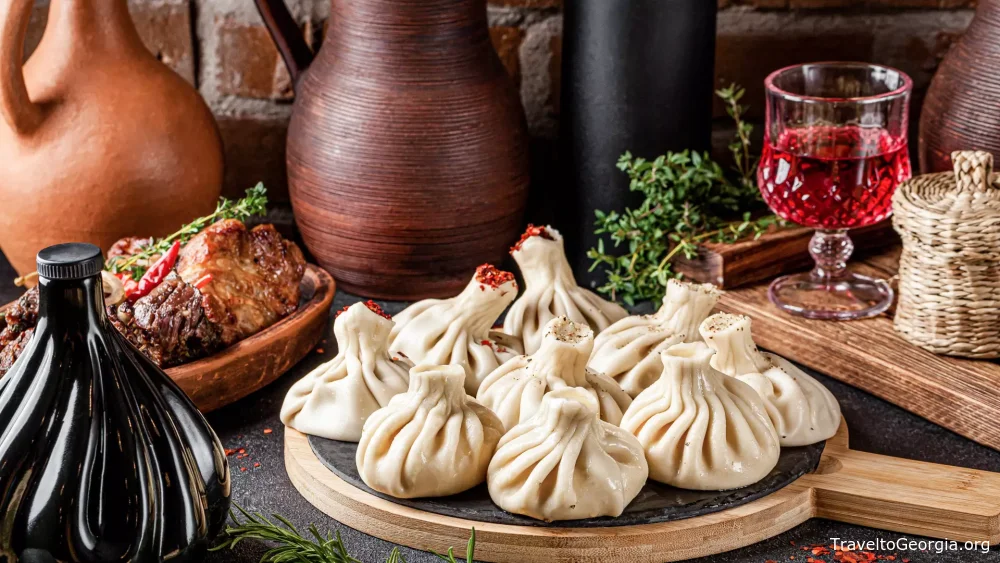
The fame of khinkali, Georgia’s most beloved dumpling, has long spread far beyond the country’s mountainous borders. What was once a humble highland dish is now a worldwide culinary symbol of Georgian culture. Today, visitors—whether arriving for business or leisure—rarely leave Georgia without savoring this remarkable dish at least once. And once they do, they tend to remember it for a lifetime. The unique blend of juicy, spiced meat wrapped in soft dough and sealed into a pouch-like form creates an irresistible burst of flavor.
Some people compare khinkali to tiny sacks tied neatly at the top, others say it’s about the size of a tennis ball, and many draw parallels with Ukrainian varenyky or Asian dumplings. Theories about its origins abound. Some culinary historians claim that khinkali was introduced to Georgia by the Mongols, who themselves were influenced by Chinese cooking traditions. A few even suggest that the word “khinkali” traces its roots to Dagestan, citing linguistic evidence found online.
But while the world debates where khinkali truly came from, Georgians are certain of one thing: khinkali is, without a doubt, a child of Georgian cuisine. More than a meal, it’s a symbol of the country’s spirit, its hospitality, and its connection to nature. Georgians see the dumpling’s rounded shape as representing the sun, while the intricate folds that seal it are said to form a borjghali—an ancient Georgian symbol of eternal life and the sun’s perpetual motion.
Khinkali and Georgian Culture
In Georgia, khinkali is not merely food; it’s a cherished cultural tradition woven into the nation’s identity. Especially in the highland regions of Pshavi, Tusheti, and Khevsureti, khinkali has deep symbolic meaning. In the old days, mountain families prepared it on Sundays and major holidays as an offering to the sun, celebrating warmth, life, and continuity. According to custom, a perfectly made khinkali should have 28 pleats—each one representing a year in the solar cycle, marking the sun’s complete journey through the sky.
A famous Mtiuletian folk poem once lamented, “Oh, poor cottage cheese khinkali with 28 folds,” referring to the sacred nature of those pleats, which were believed to channel the sun’s rays and life-giving energy. For Georgians, making khinkali wasn’t just cooking—it was a ritual act honoring the cosmos. Sundays, known in Old Georgian as “the day of the sun,” were particularly special, and khinkali was the centerpiece of the meal.
Legends of Khinkali
Across Georgia’s mountainous regions, countless legends surround the creation of khinkali. One of the most popular tells of Khinda, the wife of a high priest. To honor an important guest, she prepared a special dish of meat wrapped in dough. The visitor was so impressed by its taste that the dish was named after her—“Khindali.” Over time, the name evolved linguistically into “khinkali.”
Another legend offers a different interpretation. Some believe the dish was originally known as lkhinkari, meaning “feast door” in Georgian, symbolizing both celebration and hospitality. It was prepared for festivals, rituals, and offerings to the sun, marking important communal and spiritual occasions. Regardless of which story you believe, both reflect the same truth: khinkali is inseparable from Georgian generosity, warmth, and reverence for life.
From the Highlands to the City
Though khinkali can now be found in nearly every corner of Georgia—from elegant restaurants in Tbilisi to roadside eateries in Kakheti—its birthplace lies in the mountain villages of Pshavi and Tusheti. In the beginning, it was made with mutton and served steaming hot, the perfect meal for cold, snowy winters.
As the dish traveled from the rugged highlands to the bustling valleys and cities, it gradually evolved. City dwellers began replacing mutton with a mixture of pork and beef to suit urban tastes. Minced meat replaced hand-chopped filling, thyme (which was abundant in the mountains but rare in the city) gave way to cumin, and fresh herbs like coriander and parsley were added for extra flavor. This new version became known as kalakuri khinkali, or “city-style khinkali.” Today, you can find both the traditional mountain version and the urban adaptation in restaurants across Georgia, each offering its own unique taste and character.
How to Make Khinkali
The classic recipe for khinkali begins with about 1 kilogram of high-quality bread flour, 600 grams of beef, 400 grams of pork, two onions, a tablespoon of salt, fresh coriander and parsley, black and red pepper, and half a teaspoon of cumin.
The dough is made by gradually adding cold water to the sifted flour, mixing in salt, and kneading until smooth and elastic. It’s then left to rest for half an hour before being kneaded again to achieve the perfect texture.
For the filling, the meat, onions, and herbs are finely ground together. Spices and salt are added, and the mixture is slowly softened with water until it becomes juicy and pliable—the hallmark of good khinkali.
Traditionally, cooks use a special wooden cutter to shape the dough rounds, but any thin-lipped cup works in a pinch. Small circles of dough are filled with a spoonful of the meat mixture, then sealed by hand into a twist at the top, forming those distinctive pleats. The dumplings are then dropped into boiling salted water, twisted side down. While cooking, the pot is gently shaken to prevent sticking. Once the khinkali float to the surface, they’re boiled for another ten to fifteen minutes, then briefly rinsed with cold water.
Variations and Etiquette
Although meat khinkali remains the classic, there are many variations today. Some are filled with cottage cheese, mashed potato, mushrooms, or cheese, while modern chefs experiment with fillings like shrimp or vegetables. Each region—and even each family—has its own way of preparing and seasoning them.
In the Georgian highlands, khinkali is traditionally enjoyed with beer rather than wine, as brewing was more practical than winemaking in the cold, rugged environment. Eating khinkali also follows its own special etiquette: it’s eaten with your hands, not a fork. You must carefully bite a small hole, suck out the flavorful broth, and then eat the rest without spilling a drop. The twisted top, known as the kudi (the “hat”), is often left on the plate, a small nod to tradition and respect for the cook’s craftsmanship.
A Symbol of Georgia
To this day, khinkali remains one of Georgia’s most iconic and beloved dishes. It’s a symbol of unity, generosity, and joy—bringing people together around the table, from the snowy peaks of Tusheti to the vibrant streets of Tbilisi. Whether you believe it came from Khinda’s kitchen or was born from the sun-worshiping traditions of ancient mountaineers, one thing is certain: khinkali is Georgia’s gift to the world—simple, soulful, and utterly unforgettable.


Comments